
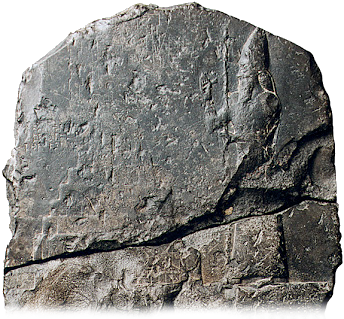
Nebuchadnezzar: Grace for the Enemy
Some people are easier to imagine receiving God’s mercy than others.
We can speak about forgiveness, grace, and the possibility of change. We can believe that no one is beyond God’s reach.
But what happens when the person receiving that mercy is someone who has caused us immense suffering?
What happens when the person we would rather see judged is the very person God chooses to humble?
Nebuchadnezzar’s story brings us face to face with that question.
The King Who Destroyed Jerusalem
Nebuchadnezzar II was the king of Babylon whose armies conquered Jerusalem, destroyed the Temple, and carried many of Judah’s people into exile.
For the people of Judah, this was not simply a political defeat.
The Temple, the centre of their worship, lay in ruins. Families were separated. People were taken from their homes and forced to live in a foreign land. Their world had been turned upside down.
And Nebuchadnezzar stood at the centre of that devastation. He was the ruler whose power had brought Jerusalem to its knees.
It is against this background that we encounter him in the book of Daniel. And what we find is not quite what we might expect.
The King Who Was Humbled
In Daniel 4, Nebuchadnezzar tells the story of his own downfall. He is a powerful ruler, accustomed to authority and surrounded by the splendour of his kingdom.
One day, as he looks over Babylon, he declares:
“Is not this great Babylon, which I have built by my mighty power and for the glory of my majesty?“
The words reveal a king who has come to believe that his greatness belongs entirely to him.
But his pride is brought low.
Nebuchadnezzar loses his reason and is driven from human society. His power, dignity, and understanding are stripped away.
Then, after a period of humiliation, something changes. He lifts his eyes towards heaven. His understanding returns. And he acknowledges the sovereignty of God.
The king who once seemed to rule everything recognises that his power is not ultimate. He praises God, acknowledging that God’s dominion is everlasting and that no one can ultimately challenge God’s authority.
And his story ends with his kingdom restored. It is a remarkable turn. The foreign king who conquered God’s people is himself humbled and brought to acknowledge the God of those people.
Grace for the Enemy
This is where the story becomes uncomfortable.
Nebuchadnezzar is not simply a troubled ruler who made a few mistakes. He is the king associated with the destruction of Jerusalem and the suffering of Judah.
And yet, in Daniel 4, we encounter a story of his humiliation, his acknowledgement of God, and the restoration of his kingdom.
The text does not explicitly call this forgiveness, nor does it tell us everything about Nebuchadnezzar’s faith or what changed in his heart. But it does portray a powerful foreign ruler being brought low and coming to acknowledge God’s sovereignty.
And that raises a difficult question.
Can we imagine God’s grace reaching someone who has caused such immense harm?
Not someone who has simply disappointed us. Not someone whose wrongdoing we can easily overlook. But someone whose actions have devastated a community, destroyed what was sacred, and changed the course of countless lives.
What does it mean when even that person is not beyond the reach of God?
The Pain That Remains
But we must not tell Nebuchadnezzar’s story as though his humbling somehow undoes what happened to Judah.
Jerusalem is still destroyed.
The Temple is still in ruins.
The people taken into exile still carry the consequences of what was done to them.
Nebuchadnezzar’s experience does not restore their homes, reunite every family, or erase their suffering.
And this matters.
Because when we speak about grace for someone who has caused harm, we must remember those who have suffered because of them.
We encountered something similar in David’s story. David receives mercy, but Bathsheba and Uriah’s story cannot simply disappear behind David’s repentance.
Here, too, the suffering of Judah must remain part of the picture.
Grace for the one who caused the harm does not make the harm less real.
And it does not require those who suffered to pretend that everything is well. The scandal is not that the suffering no longer matters. It is that God’s reach extends even to the person associated with that suffering.
The King Who Refused to Learn
And then we come to Daniel 5.
The king is now Belshazzar, not Nebuchadnezzar.
During a feast, Belshazzar orders the sacred vessels taken from the Temple in Jerusalem to be brought out so that he and his guests can drink from them.
The vessels that had belonged to the house of God are treated as ordinary objects of celebration.
Then a mysterious hand writes a message on the wall.
Daniel is summoned to interpret it.
And before he does, he reminds Belshazzar of Nebuchadnezzar’s story.
He tells him how Nebuchadnezzar was humbled because of his pride and how he came to acknowledge God’s sovereignty.
Then Daniel says:
“And you, Belshazzar his son, have not humbled your heart, though you knew all this.“
A historical note: Although Daniel presents Belshazzar in relation to Nebuchadnezzar as his “son”, Belshazzar was not his biological son. Historically, Belshazzar was the son of Nabonidus, a later king of Babylon. The language in Daniel can be understood in the broader sense of royal succession or ancestry.
The contrast is striking.
Nebuchadnezzar was humbled.
Belshazzar knew the story but did not humble himself.
Nebuchadnezzar came to acknowledge God’s sovereignty.
Belshazzar exalted himself against God.
And that very night, Belshazzar’s kingdom came to an end.
The text does not tell us that Belshazzar was explicitly offered forgiveness and rejected it.
But it does show us someone who knew the story of another person’s humbling and refused to learn from it.
What We Do With What We Have Been Given
There is something important in this contrast. Nebuchadnezzar’s story is one of pride brought low and a ruler coming to acknowledge that his power is not ultimate.
Belshazzar’s story is one of pride continuing in the face of a warning. And perhaps this raises a question for us.
What do we do with the truth we have already encountered?
What do we do when we have witnessed the possibility of humility, repentance, and change?
Do we allow those stories to shape us?
Or do we continue as though they have nothing to do with us?
Grace is not something we earn through humility. But humility matters. It is the willingness to acknowledge that we are not the ultimate authority, that our actions matter, and that we are not beyond the need for God’s mercy.
Nebuchadnezzar’s story invites us to consider what happens when pride gives way to that recognition.
Belshazzar’s story warns us about the danger of refusing to learn.
The Question of Grace
Jonah’s story asked whether we can accept God’s mercy towards our enemies.
Nebuchadnezzar’s story brings us face to face with the enemy himself.
The ruler associated with the destruction of Jerusalem is also a ruler who is humbled and brought to acknowledge God’s sovereignty. And that is difficult to hold together.
Because we know that the suffering of Judah was real.
We know that the destruction of the Temple mattered.
We know that the people who were carried into exile did not simply stop suffering because their conqueror was humbled.
And yet the story refuses to place Nebuchadnezzar beyond God’s reach.
Perhaps this is part of the scandal of grace. That God’s mercy is not confined to the people we consider deserving.
That the boundaries we draw around who may receive grace are not necessarily the boundaries God draws. And that even those we struggle to forgive remain within the reach of God’s compassion.
The Question That Remains
Who do we struggle to imagine receiving God’s mercy?
Whose actions have caused such deep harm that we find it difficult to believe that change is possible?
Can we acknowledge the reach of God’s grace without minimising the suffering of those who have been harmed?
And what do we do with the stories of humility and transformation we have already witnessed?
Nebuchadnezzar’s story does not ask us to forget what happened to Judah. It asks us to consider whether even our enemies are beyond the reach of God’s mercy.
And Belshazzar’s story asks whether we are willing to learn from what we have seen.
Perhaps grace is more expansive than we expect. And perhaps it asks more of us than we realise.
Scripture for Reflection
Daniel 4:34–37 (excerpt)
“His dominion is an everlasting dominion, and his kingdom endures from generation to generation.“
Read Nebuchadnezzar’s account of his humbling and notice what changes in his understanding of power and authority.
Daniel 5:18–23 (excerpt)
“And you, Belshazzar his son, have not humbled your heart, though you knew all this.“
Notice how Daniel contrasts Nebuchadnezzar’s experience with Belshazzar’s response.
If time allows, read:
- Daniel 1:1–7
- Daniel 4:1–37
- Daniel 5:1–31
A Practice for This Week
Take some time to reflect on the stories of Nebuchadnezzar and Belshazzar.
Then sit quietly and ask:
Who do we struggle to imagine receiving God’s mercy?
Are there people whose actions have caused such deep harm that we find it difficult to imagine their repentance or transformation?
Can we acknowledge the possibility of God’s mercy without minimising the suffering of those who have been harmed?
And what have we already witnessed about humility, repentance, and change that we have struggled to take to heart?
You do not need to resolve every question.
Simply notice what emerges, and bring it honestly before God.
Prayer
Merciful God,
your grace reaches further than we can imagine.
You see the suffering caused by human pride, the wounds left by violence, and the lives changed by the actions of others.
We confess that we struggle to imagine your mercy reaching those who have caused deep harm.
Keep us from minimising the suffering of those who have been hurt.
And keep us from believing that anyone is beyond the reach of your compassion.
Where pride has hardened our hearts, humble us.
Where we have refused to learn, open us to truth.
Where we have caused harm, lead us towards repentance and change.
And where we carry the pain of what others have done, meet us with compassion.
Teach us to hold together the truth of human suffering and the hope of your grace.
Amen.
[…] Grace That Offends: A Seven-Part Devotional Series – Part 4 Grace That Offends: A Seven-Part Devotional Series – Part 3 Reflection: John 21 – Calling Grace That Offends: A Seven-Part Devotional Series – Part 2 Reflection: Proverbs 30:5-9, Luke 9:1-6 […]